
St. Dymphna
#MOB 37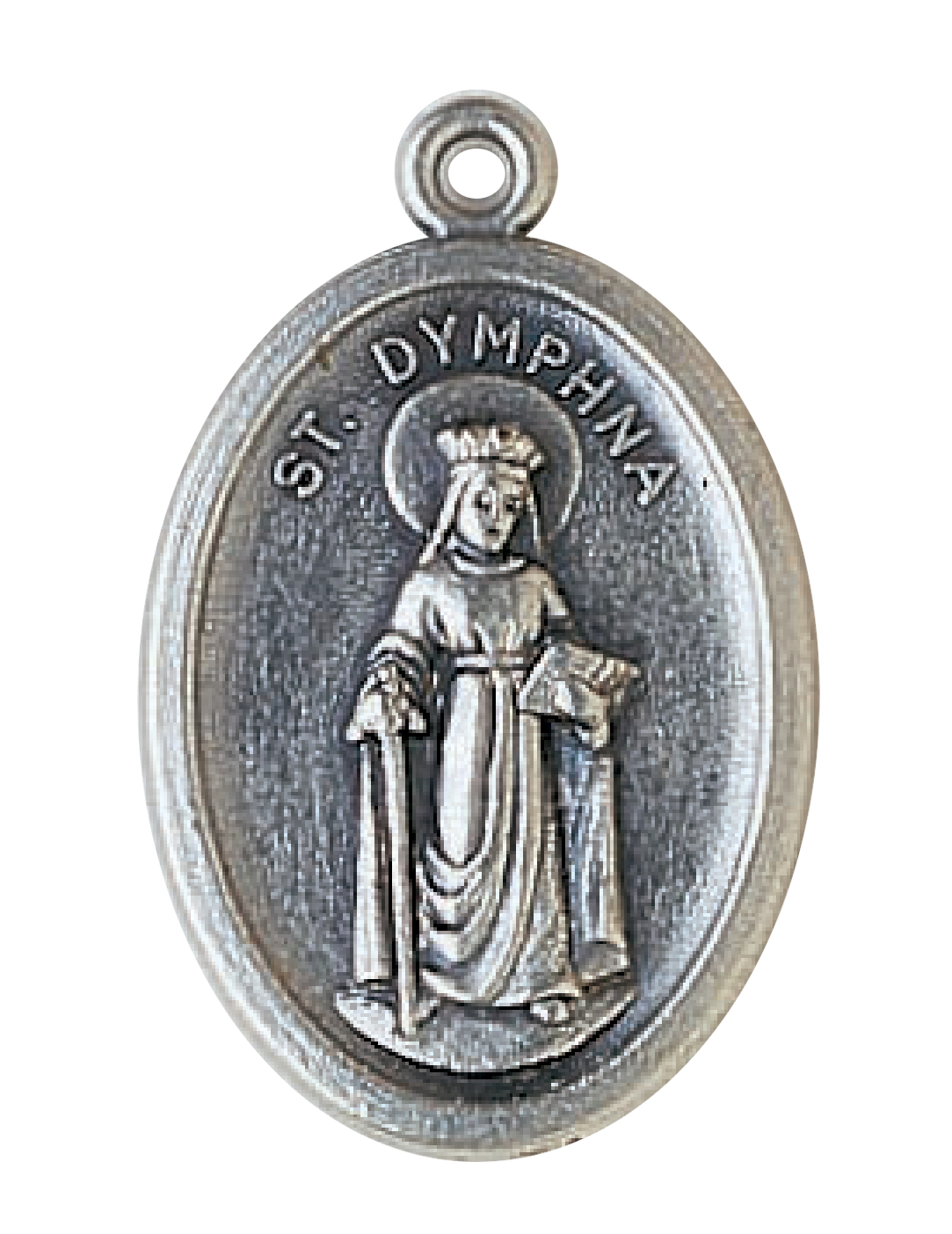
MOB 37 St. Dymphna
According to Catholic and Orthodox tradition, Dymphna was born in Ireland in the 7th century. Dymphna’s father Damon was a petty king of Oriel. Her mother was a devout Christian.
When Dymphna was 14 years old, she consecrated herself to Christ and took a vow of chastity. Shortly thereafter, her mother died. Damon had loved his wife deeply, and in the aftermath of her death his mental health sharply deteriorated. Eventually the king’s counsellors pressed him to remarry. Damon agreed, but only on the condition that his bride would be as beautiful as his deceased wife. After searching fruitlessly, Damon began to desire his daughter because of her strong resemblance to her mother.
_or_Gerard_Seghers_(Attr.).jpg)
When Dymphna learned of her father’s intentions, she swore to uphold her vows and fled his court along with her confessor Father Gerebernus, two trusted servants, and the king’s fool. Together they sailed towards the continent, eventually landing in what is present-day Belgium, where they took refuge in the town of Gheel.
One tradition states that once settled in Geel, Dymphna built a hospice for the poor and sick of the region. However, it was through the use of her wealth that her father would eventually ascertain her whereabouts, as some of the coins used enabled her father to trace them to Belgium. Damon sent his agents to pursue his daughter and her companions. When their hiding place was discovered, Damon travelled to Geel to recover his daughter. Damon ordered his soldiers to kill Gerebernus and tried to force Dymphna to return with him to Ireland, but she resisted. Furious, Damon drew his sword and struck off his daughter’s head. She was said to have been 15 years old when she died. After Dymphna and Gerebernus were killed, the residents of Geel buried them in a nearby cave. Years later, they decided to move the remains to a more suitable location.
In 1349 a church honouring Dymphna was built in Geel. By 1480, so many pilgrims were coming from all over Europe, seeking treatment for psychiatric disorders that the church housing for them was expanded. Soon the sanctuary for those considered “mad” was again full to overflowing, and the townspeople began taking them into their own homes. Thus began a tradition for the ongoing care of those with psychiatric conditions that has endured for over 500 years and is still studied and admired today. Patients were, and still are, taken into the homes of Geel’s inhabitants. Never called patients, they are called boarders, and are treated as ordinary and useful members of the town. They are treated as members of the host family. They work, most often in menial labour, and in return, they become part of the community. Some stay a few months, some decades, some for their entire lives. At its peak in the 1930s, over 4,000 ‘boarders’ were housed with the town’s inhabitants.
Back Side
